Rio São Francisco · Brasil

CARRANCA

/ka·RRAN·ka/ — plural carrancas. Portuguese for a scowl.

The face on the front of the boat.

Through the 1800s and the first half of the 1900s, the cargo boats working Brazil's São Francisco River carried a carved wooden head bolted to the prow — part human, part animal, always furious. It rode just above the waterline, facing forward, and its job was to frighten whatever lived underneath.
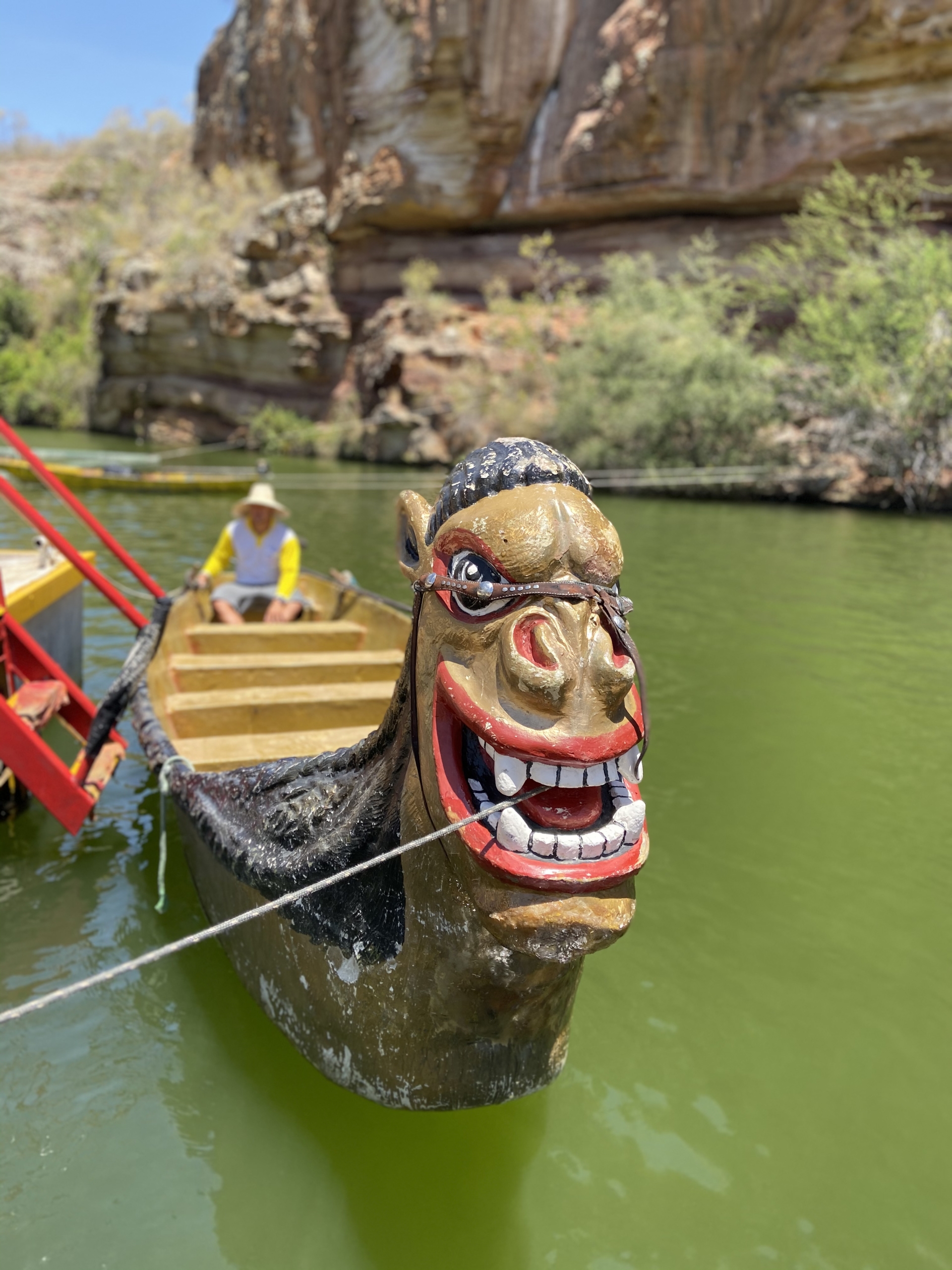
A painted carranca on the prow of a wooden boat in green water — black mane, wide human eyes ringed in red, and an open red mouth crowded with white teeth. A boatman in a straw hat sits behind it; sandstone cliffs rise across the water.
Hero. A carranca on the prow

What it is · what it fought · where it went
What it is
A ship's figurehead — carved for the prow of a river boat, not for a doorway.
Made of
A single block of umburana, cedar or vinhático, worked with chisel, knife and handsaw.
Home water
The middle São Francisco, above all the twin cities of Juazeiro (BA) and Petrolina (PE).
The carver
A carranqueiro. Many worked with no drawing at all — straight into the wood.

01 — Read the face

Half human, half beast, on purpose

A carranca is zooantropomorfa: human eyes set into an animal head. That mix is the whole point. It had to be recognisable enough to seem watchful, and wrong enough to be frightening — and the belief along the river was blunt about it. The more horrifying the carving, the better it worked.

  • Mane A lion's, carved lock by lock, often the largest part of the piece.
  • Eyes Human and wide open. The carranca watches the water so the crew can sleep.
  • Snout Dog, wolf or big cat — this is where the animal takes over.
  • Teeth Bared and oversized. Classic pieces were painted chalk white with red mouths.
  • Neck Not decoration: the stub that bolted to the prow beam and took the spray first.
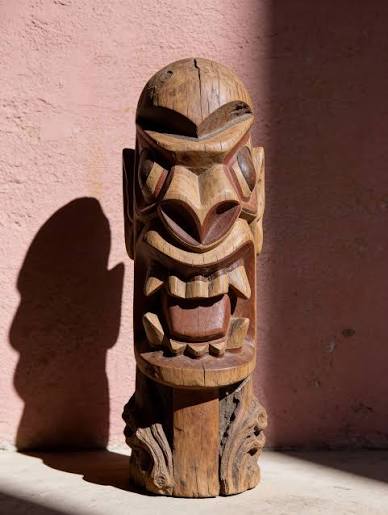
An unpainted carranca standing against a pink stucco wall in raking sunlight, throwing a hard shadow. The carving is angular: a domed head, deep-set slit eyes, a ridged snout, and a square mouth of blocky teeth.
Close-up. Mane, human eyes, bared teeth

02 — What it was guarding against

Something lives under the Velho Chico

River people call the São Francisco Velho Chico, Old Frank, like a relative. And in its deep water they place the caboclo d'água — a squat, bronze-skinned being who tips boats over at night and drowns the men in them.

You could keep him off three ways: throw tobacco to the water, drive a blessed knife into the hull, or carry a carranca on the prow. The story gets good when the carranca loses. It can't always beat him — but before the boat goes over it lets out three long groans, and a boatman who hears them has time to save himself.

um dois três

Three groans. Then you look to the rocks.

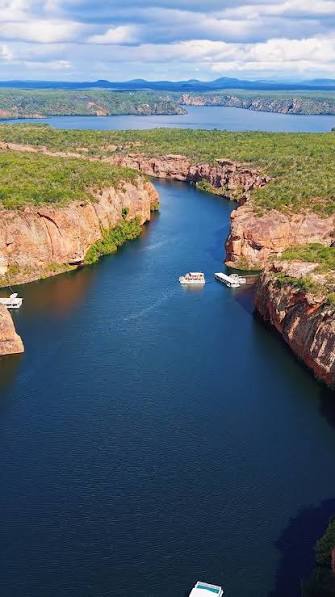
The São Francisco from above, winding deep blue between orange sandstone cliffs topped with green scrub. Two small tour boats sit near the bend, and blue hills fade out under a clouded sky.
The river. The São Francisco

Researchers disagree about where the custom came from — African inheritance, Indigenous carving, or, in the reading of Paulo Pardal, who wrote the standard study, plain imitation: São Francisco landowners saw carved figureheads on ocean ships docked in Bahia and wanted the same on their own barges. It probably began as an ornament. It became an amulet.

03 — No two alike

The same scowl, five states wide

The São Francisco rises in Minas Gerais, crosses Bahia, brushes Pernambuco and empties between Sergipe and Alagoas. The carving changes as the water moves.

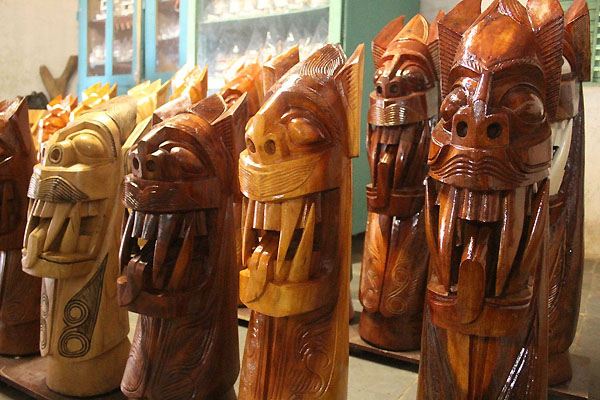
A row of unpainted carrancas in a shop, wood running from pale cream to dark red-brown. Each has a long snout and protruding fangs; the palest is cut all over with rows of circles and lines.

Pirapora, MG

Left the colour of the wood, never painted. Big teeth, and the surface cut with rows of lines and circles.

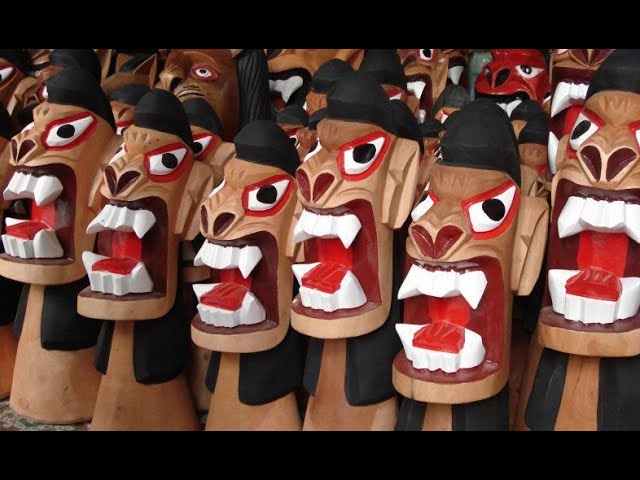
Dozens of brightly painted carrancas packed together — black manes and bodies, eyes outlined in red, and wide mouths painted red inside with oversized white teeth and fangs.

Vale do São Francisco

Painted bright, teeth left white. This is the version that ended up in every souvenir shop in Brazil.

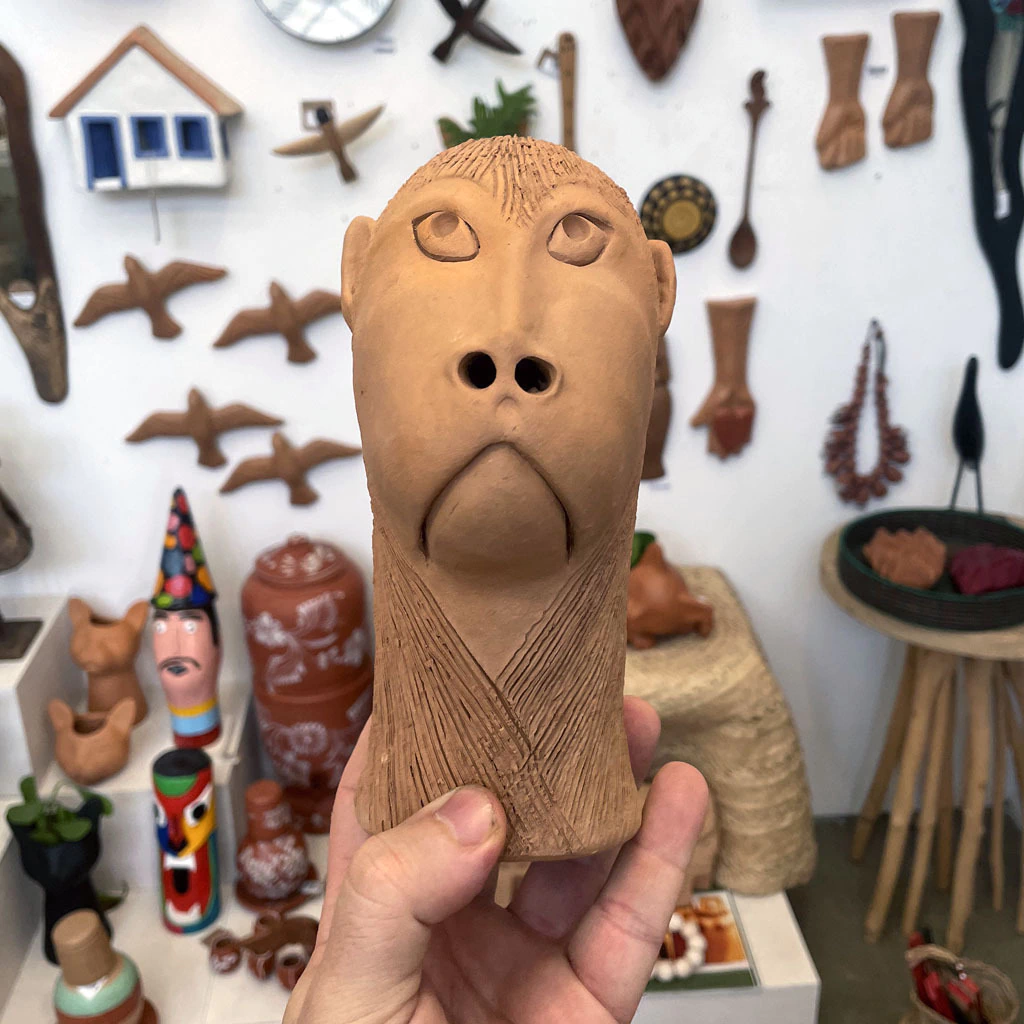
A hand holding a small unglazed terracotta carranca: a long face with heavy-lidded eyes, two deep round nostrils and a downturned mouth, hair and chest scored with fine combed lines. A shop wall of clay birds and folk ceramics behind.

Jequitinhonha, MG

Not carved at all — built in clay and fired, in flatter, more geometric shapes, by potters in a valley famous for ceramics.

04 — Downstream

How it left the water and ended up on your shelf

The carranca belongs to a working river: barges hauling salt, hides, cotton and people between Pirapora and Juazeiro, weeks at a time. When that traffic died the tradition should have died with it. Instead it moved ashore, shrank, and became something else — an amulet for a house, and one of the most recognisable objects Brazilian folk art has produced.

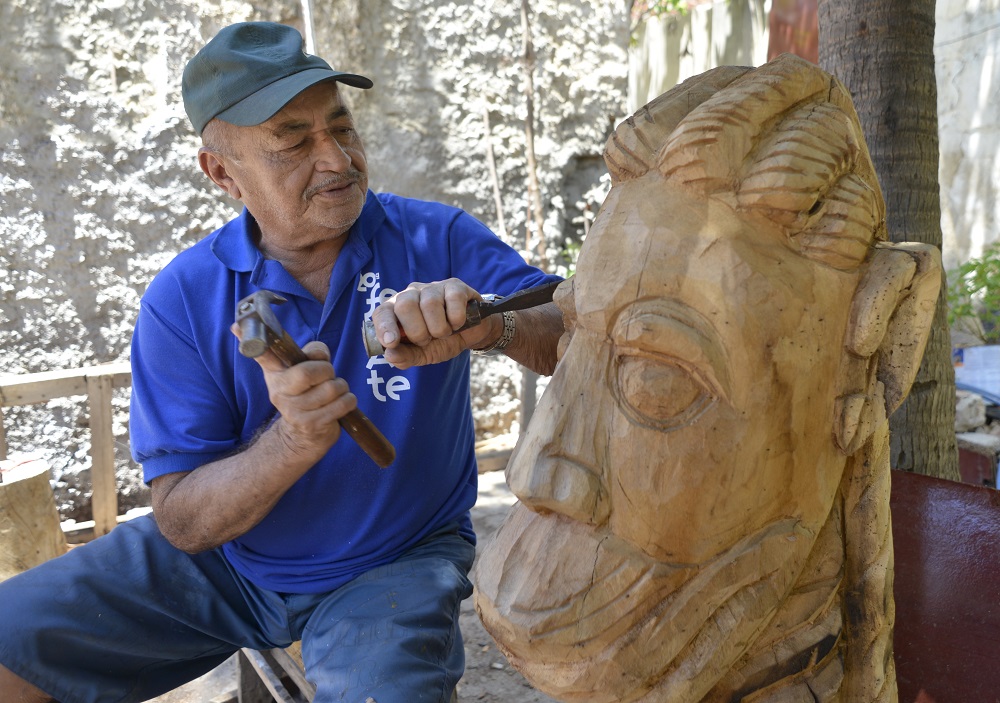
A carranqueiro in a blue polo shirt and cap cutting into a large half-finished carranca head with a mallet and chisel, outdoors in dappled light. The face is roughed out — brow, eye and ear already readable in the pale wood.
Ashore. A carranqueiro's workshop

Figureheads reach the São Francisco

Carved faces start appearing on the prows of river cargo boats, first as ornament, soon as protection.

The heyday

Juazeiro and Petrolina become the centre of production. Master carvers work full time supplying the boats.

The barges go quiet

Lighter canoes, motors, roads and dams take the freight off the water. The old boats are broken up; their heads are taken home.

On land, in five states

Carved and fired the length of the river and sold nationwide — souvenir on one shelf, museum piece on the next.

05 — The hands

Names worth knowing

Mestre Guarany

Bahia · 1882–1985

Francisco Biquiba dy Lafuente Guarany carved his first figurehead in 1901 at seventeen and became the most celebrated carranqueiro in the country. He stopped when the riverboats did.

Mestre Bitinho

Petrolina, Pernambuco

Severino Borges de Oliveira. Petrolina's oldest working carranqueiro — no sketch, no plan, just chisel, knife and saw straight into the umburana block.

Ana das Carrancas

Petrolina, Pernambuco

Took the form out of wood and into clay and made it hers. Her name is now attached to the object itself.

Most of what the wider world knows about carrancas it owes to three photographers — Marcel Gautherot, Pierre Verger and Antoine Bom — who documented the river and its boats in the 1940s and 50s, just as the tradition was ending.